Movement in the Atacama: The Means and The Meaning
In the driest desert on Earth, I learned that movement isn't just how you get to the goal—it is the goal.
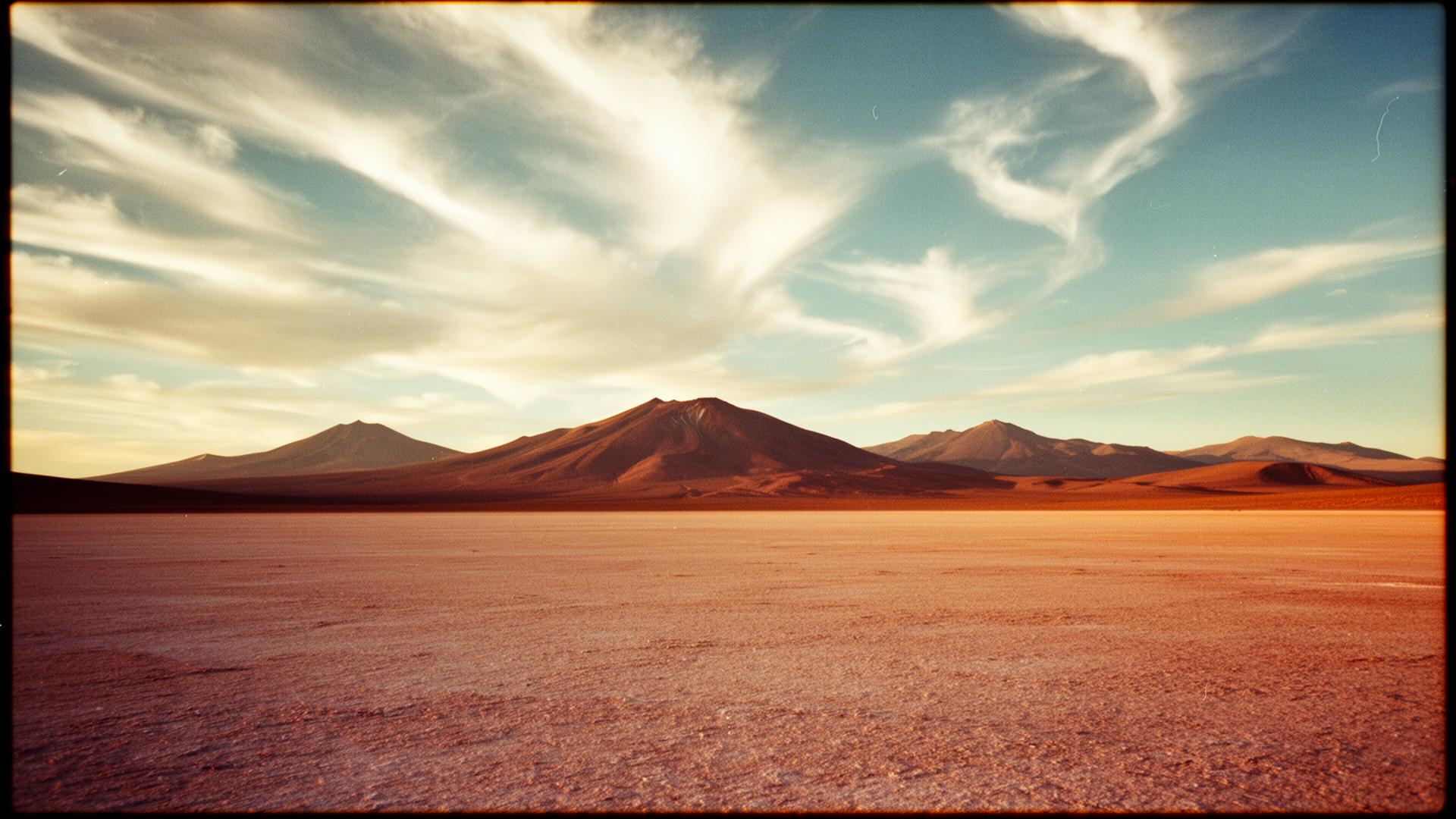
I gave myself due credit—the conditions were brutal. The Atacama Desert is the driest in the world. And while the Sahara might get the cinematic glory, this place, somehow, felt even more indifferent to human life. I had just left the colonial outpost of Arequipa, Peru, and was a few days from crossing into Chile, signs of life fading from the landscape with each passing kilometer.
Crossing that border marked a subtle but significant shift. For the first time since leaving the north coast of Alaska—nearly 10,000 miles behind me—I let myself imagine the end. Not just dream about it, but feel it in my bones. After 17 months on the road, only two countries remained.
But borders didn't seem to matter much at this point. What matters is what moves you. And most of the time, that's the environment.
Wind and rain. Heat and cold. Altitude. Hunger and sunburn. Steep climbs and rocky descents. Swimmable streams and grand vistas. Soft earth to lay your tent or the promise of a hot meal. These were my guardrails as I barreled my way south—the guiding hand present in seemingly every decision. The illusion of free will often felt even further away than it did in "normal" life.
A week and a half later, I began crossing inland—anxiously working toward my departure from this place. Or maybe, more accurately, being forcefully ushered out by it.
The temperatures were manageable, but only because the wind rose in direct relation to the intensity of the sun—so relentless at times it was hard to know if it was my adversary or my only friend.
No water. No shade. Just the wind and the sun. And the alarm bells in your nervous system screaming: GET. OUT. NOW.
The Atacama Desert — the driest place on Earth, indifferent to human life
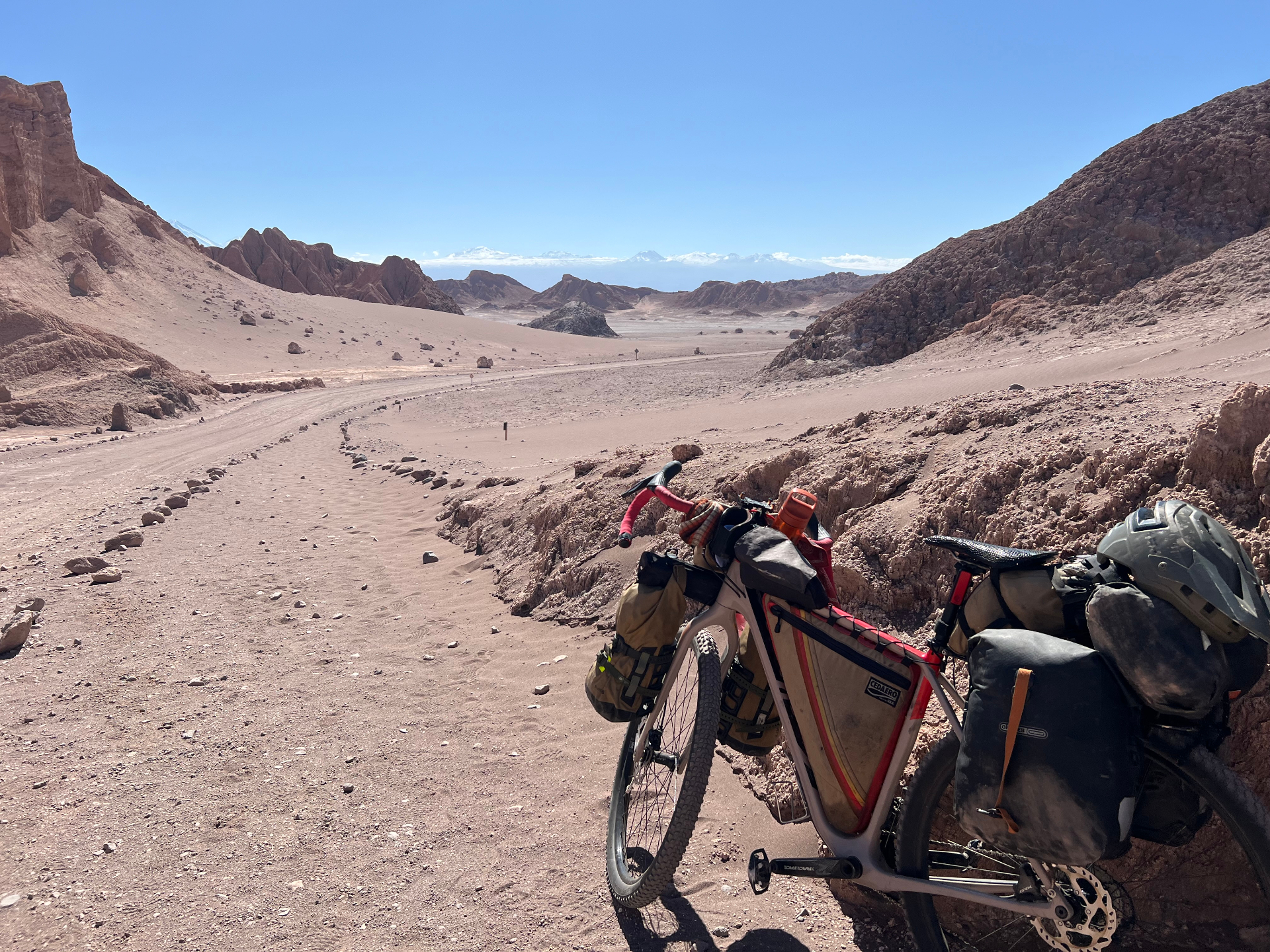
So yeah, I may have left San Pedro de Atacama—a little village beneath one of the most unbelievable night skies I've ever seen—a bit hastily. But I was experienced now. I had learned to read my body and the road. The skin on my leg looked good. My energy was solid. All signs said go.
I rolled out at 6 p.m., when the high sun finally broke. The wind turned gentle, even helpful. Belly full, legs steady, the road ahead glowing in the dusk. Purple and blue hues stretched across the desert sky as I began to climb.
I figured I'd knock out what I could and camp just before losing light. The gradient steepened, but I felt strong. I hiked off-road, hoping to find a patch of sand for my tent not overtaken by the ancient volcanic rock. I had no luck, but enough light still to take the time and clear some ground—one overgrown stone at a time. Dinner was a leftover turkey sandwich and half a jar of peanut butter as I watched the silent electrical storms float over the valley below, dozens of them effortlessly becoming and unbecoming, like the now-dying gusts of wind.
I broke camp early the next morning, trying to take advantage of the sleeping wind and gentle sun. But it didn't take long to realize I hadn't gotten nearly as far as I thought. The climb ahead was still immense, and I was already crawling. Between the thin air and the sweat pooling in my liner—turning my stump into a slick, sliding mess—every pedal stroke felt like it was costing me skin I couldn't afford to lose. The 5,000-meter altiplano was still far off, well behind the countless false summits mocking me ahead.
Normally, this wouldn't be a problem. I was used to slow progress. But here in the Atacama—where the next known water source lay hundreds of kilometers away—it wasn't just a grind.
It was a warning. I was moving too slowly, and I didn't have enough water to make it.
So I made the call. I turned back.
I soared down the same mountain that had taken me hours to climb, coasting back into San Pedro de Atacama—now somehow smaller, quieter, as the mountains loomed just a little taller above it.
My mind wasted no time in berating me. I have no business being here, trying a climb like this, in these conditions, with one leg no less. And to be so reckless as to run out of water. The feeling was not unfamiliar. Like plenty of difficult moments before, I felt trapped—desperate for help, but knowing there was no help coming. Praying someone would come and take me away from this place.
But then—clarity.
I realized I was trying to negotiate with a landscape that didn't have a signature. The desert didn't care how much water I was carrying. The wind didn't care how tired I was. This wasn't about triumph or the drama of "overcoming."
It was about surrendering to the simple facts.
I had a goal—at this point, more a destiny—the path from which I had accepted I would not deviate. And to reach that goal, there was only one thing I had to do. Only one thing I could do.
Just, move.
So I did.
I spent the night in town, added two more liters of water to my kit, and rolled out again at first light. I climbed the same mountain all over again. It wasn't easier. But this time, I had clarity.
And that evening, when I finally reached the high desert plain of the altiplano, I found a family of guanacos standing by a trickle of fresh water. I watched them—so at home in a place so unwelcoming. We shared a drink, and I kept moving. I looked back at the mountain steppes from where I came and felt impressed, not proud.
> Movement was the means. And now, movement was the meaning. This is the same orientation we build inside the Misogi Program — preparing the body and mind to keep moving when the landscape refuses to negotiate.
In the Atacama, I learned that you cannot negotiate with a landscape that doesn't have a signature. The desert doesn't care about your effort or your exhaustion—it only responds to the reality of your preparation. We often waste immense mental energy arguing with our own discomfort during a hard session or a long recovery. But the most powerful shift you can make is to stop debating the conditions and start surrendering to the facts. Sometimes, the only way through is to stop looking for a way out and simply decide to move.
About the Author
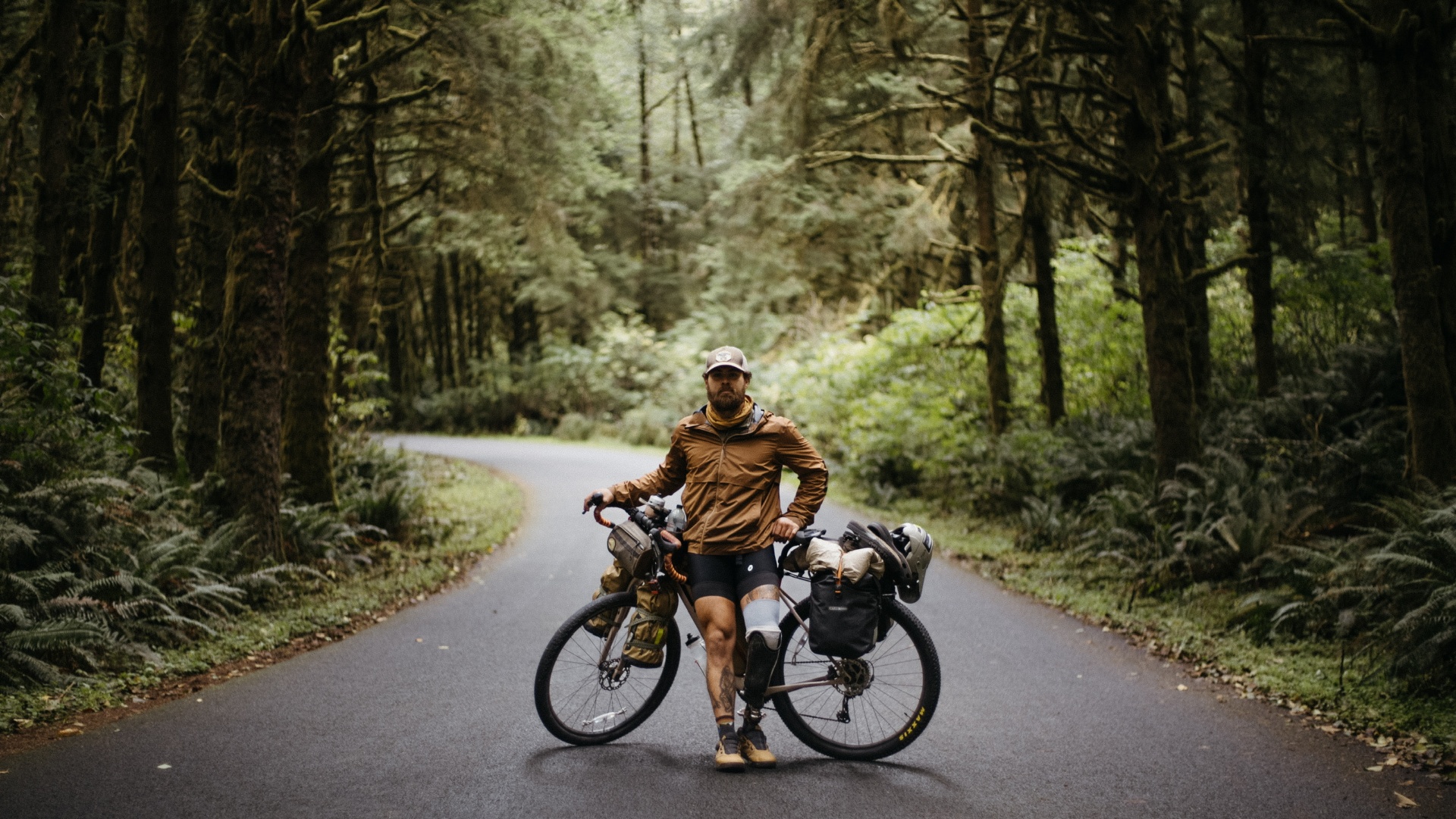
Sam Maddaus
U.S. Navy veteran, below-knee amputee, Certified Strength Coach, and Wilderness First Responder. Sam has thru-hiked the 2,650-mile Pacific Crest Trail, solo bikepacked 16,000 miles from Alaska to Argentina, and provided prosthetic care in Guatemala. He coaches from lived experience—building programs rooted in structural integrity, intentional movement, and mission-ready preparation.